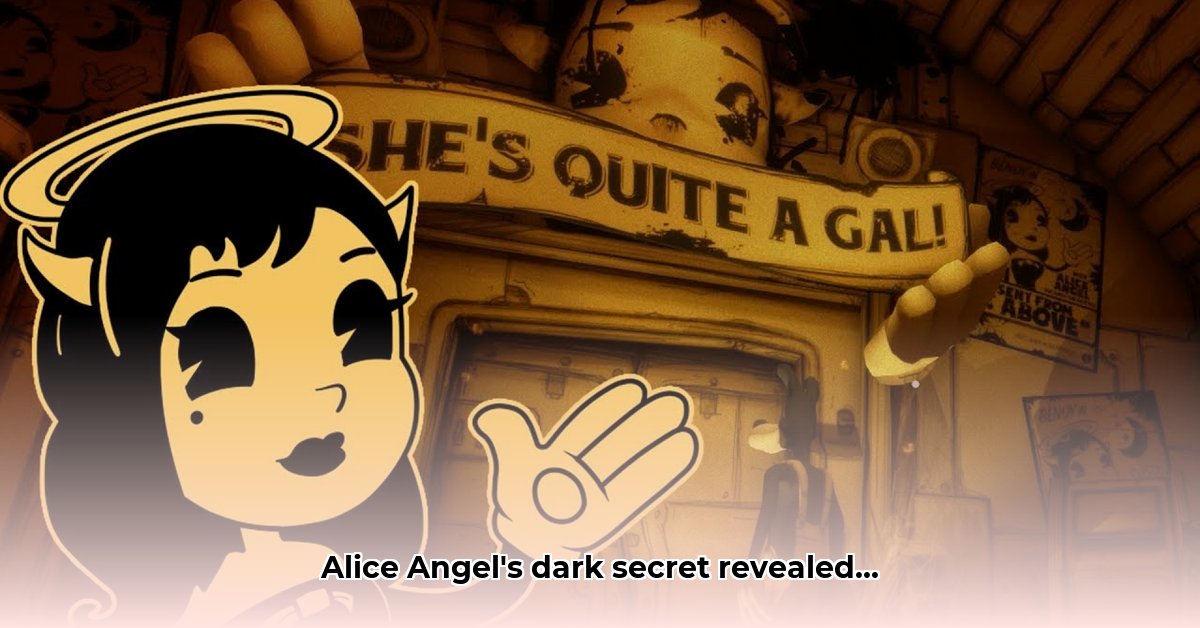
Alice Bendy: A Descent into Darkness
Alice Angel, from Bendy and the Ink Machine, transcends the role of a simple video game character; she embodies a compelling study in transformation, a descent from innocent charm to terrifying monstrosity. Her narrative arc powerfully reflects the game's unsettling themes and leaves an indelible mark on players. Her journey, from radiant star to corrupted ink demon, is a testament to the power of a well-crafted, morally ambiguous character. But what factors contribute to this dramatic shift?
The Enchanting Beginning: An Angel's Grace
Initially, Alice Angel embodies pure delight. She is the epitome of a classic cartoon angel: beautiful, possessing a sweetly melodic voice, and musically talented. This initial portrayal is crucial; the stark contrast with her eventual fate heightens the impact of her story. This angelic image, this enchanting singing voice – they become haunting echoes as we witness her disturbing metamorphosis. Her initial appeal makes her fall from grace all the more poignant and memorable. How does this initial perception influence our understanding of her later actions?
The Cracks in the Facade: A Slow Corruption
The idyllic façade, however, quickly crumbles. The unsettling, ink-drenched atmosphere of the game begins to subtly corrupt Alice's cheerful demeanor, replacing it with a chilling darkness. This transformation isn't abrupt; it's a slow, insidious corruption. What precisely drives this change? Is it solely the ink's influence, seeping into her very being? Or is there a more profound, personal conflict at play—a hidden struggle only hinted at within the game's narrative? The game masterfully avoids providing definitive answers, making Alice's story even more compelling and open to various interpretations. This ambiguity is intentional, fueling speculation and enriching the layered complexity of her character. What are the implications of this deliberate narrative vagueness?
Twisted Alice: The Horrifying Culmination
Twisted Alice, her final form, is a truly terrifying spectacle. She is a warped, grotesque parody of her former self—a chilling reflection of the game's central themes of obsession and its destructive consequences. The once-angelic features are twisted and distorted, mirroring the unsettling atmosphere of the game's world. This drastic, shocking transformation leaves a lasting impression. But was she an active participant in this transformation, embracing her grotesque new reality? Or was she a helpless victim, trapped in the machinations of a far greater, sinister force? The answer, like much of the game's narrative, remains elusive, adding to the enduring fascination with her character. How does this lack of clarity impact the overall narrative experience?
The Power of Uncertainty: A Multifaceted Narrative
The brilliance of Alice’s story lies in its inherent ambiguity. Unlike many video game characters with clearly defined motivations, Alice's descent remains shrouded in mystery. The game deliberately avoids offering a simple explanation for her complete transformation. This lack of clarity adds a layer of psychological depth to the narrative, inviting players to engage actively, to speculate, and to construct their own understanding of her motivations and the forces shaping her fate. This open-ended storytelling technique encourages replayability and fosters diverse interpretations, allowing each player to develop their own unique perspective on Alice's journey. How does this approach contribute to the game's lasting impact?
Fan Reactions and Lasting Influence: An Enduring Legacy
Alice Angel's enduring popularity is undeniable. Fans are captivated by her tragic tale. She has inspired countless works of fan art, fanfiction, and cosplay. This immense outpouring of creative energy demonstrates just how deeply her character resonates with players, showcasing the powerful impact of a well-developed, morally ambiguous figure. The enduring appeal of Alice, even in her corrupted state, is a testament to her compelling character arc. Her image, twisted and horrifying though it may be, still holds a strange fascination for many. Why does she continue to resonate so strongly with fans? It's likely a combination of her initial charm, the shock of her transformation, and the enduring mystery surrounding her motivations.
How Did Alice Angel's Personality Change in Bendy and the Ink Machine?
Key Takeaways:
- Alice Angel's initial portrayal is that of a charming and exceptionally talented cartoon star.
- The Ink Machine's influence profoundly alters her, both physically and mentally.
- Her transformation stems from a descent into obsession, fueled by trauma and a desperate pursuit of perfection.
- Inconsistencies in the game's narrative surrounding Alice's earlier career contribute to the complexity of her character.
- Alice's dramatic shift mirrors the game's overarching themes of flawed creation and the corrupting power of ambition.
From Angelic Icon to Twisted Horror
Initially, Alice Angel perfectly embodies a classic, idealized cartoon character. She's charming, talented – a singer, a dancer – a perfect counterpoint to Bendy's mischievous nature. However, this image is shattered by the game’s dark narrative and the transformative power of the Ink Machine. How exactly did Alice Angel's personality change throughout Bendy and the Ink Machine? The answer lies in the game's dark narrative and the transformative power of the infernal Ink Machine.
The Ink Machine's Corrosive Influence
The Ink Machine acts as a catalyst for Alice's drastic transformation. This isn't merely a physical alteration; it's a profound psychological fracturing. The process is traumatic and horrific, leaving her both physically and mentally scarred, fundamentally altering her worldview and driving actions she might never have considered in her former state. What specific aspects of the machine's influence contribute to her change?
Obsession and the Pursuit of Perfection
Alice's metamorphosis isn't solely about physical changes; it reveals a deep-seated obsession with perfection that manifests as a desperate need to recapture a lost ideal. This obsession, likely rooted in earlier trauma and a fractured self-image, fuels her descent into darkness, compelling her to commit horrifying acts in the name of an unattainable beauty. How does this obsession relate to the broader themes of the game?
Narrative Inconsistencies and Ambiguity
Adding to the intrigue are inconsistencies surrounding Alice's initial level of popularity. Some sources suggest moderate success, others portray her as a rival to Bendy. These discrepancies highlight the game's deliberate ambiguity—a characteristic that significantly adds to the complexity of her character. How do these inconsistencies enhance the overall narrative?
A Reflection of Broader Themes
Ultimately, Alice's transformation mirrors Bendy and the Ink Machine's broader themes: the dangers of unchecked ambition, the failures of creation, and the blurred line between reality and illusion. Her story serves as a cautionary tale, a descent into madness driven by the desperate pursuit of an unattainable ideal. This compelling narrative effectively demonstrates the powerful capacity of trauma to fundamentally alter a person, leaving behind a shattered reflection of what once was. How might further analysis of player interpretations shed more light on her enduring appeal?
⭐⭐⭐⭐☆ (4.8)
Download via Link 1
Download via Link 2
Last updated: Friday, May 23, 2025